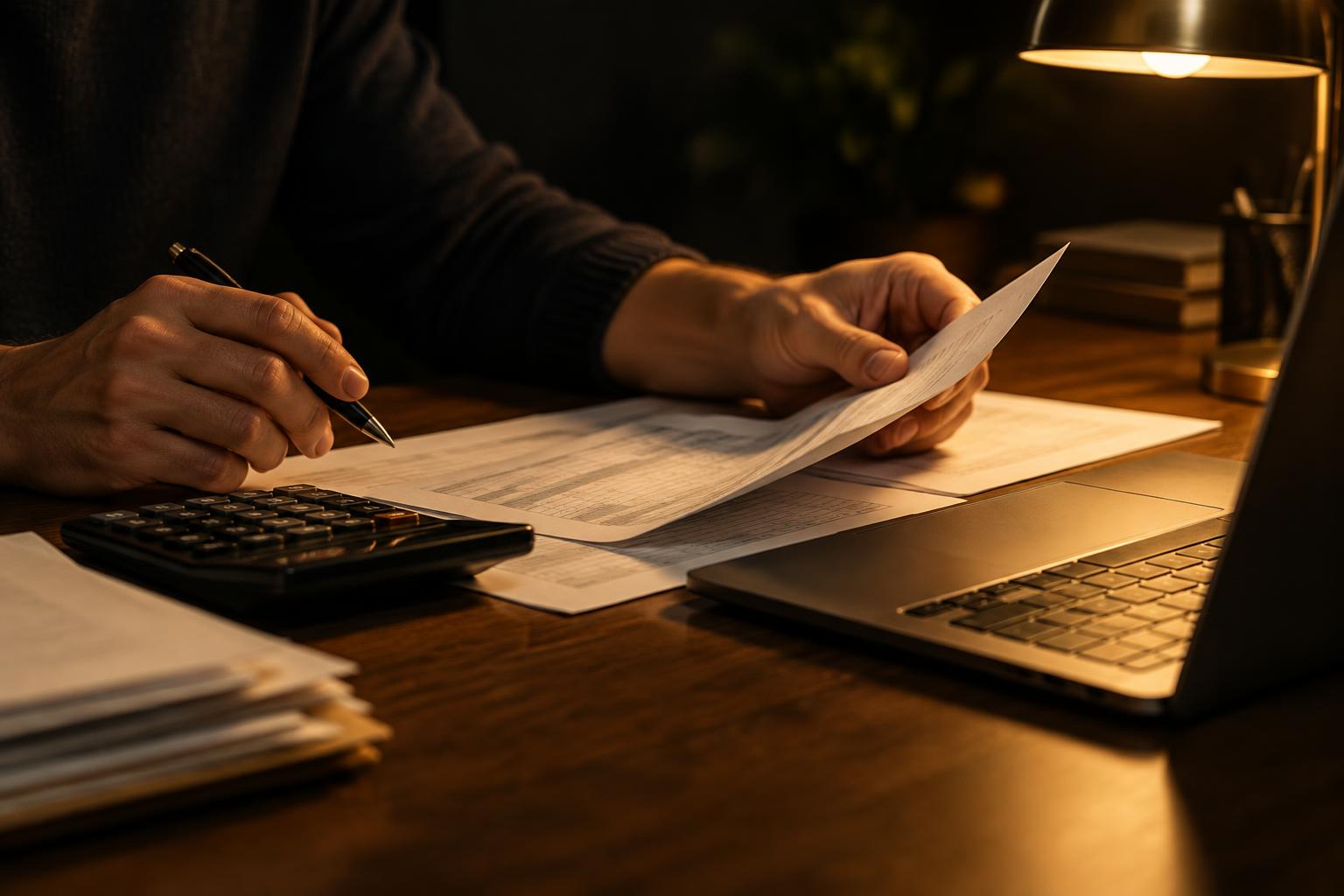
Most people who are nervous about a first tax appointment are not nervous about taxes. They are nervous about the bag. They picture a preparer opening a folder, sighing, and asking why the receipts are not in order. So let's take that worry off the table first: the first conversation is about understanding your year, not about paperwork being perfect.
Here is what actually helps.
Start with the group that applies to everyone
These six things cover the basics of who you are and what came in during the year:
- Photo ID for you, and for your spouse if you file together
- Social Security numbers or ITINs for everyone who will appear on the return
- Last year's return, if you have it
- Every W-2, 1099, 1099-K and 1099-NEC that arrived this year
- Any letter or notice from the IRS or the state of Texas
That is the foundation. The rest depends on what kind of year you had.
If you own a home
Bring your Form 1098 mortgage interest statement and the property tax statement. If you bought or sold during the year, bring the closing paperwork too. Those closing documents are the ones people most often forget, and they are the hardest to reconstruct later.
If you have children or pay for care
You will want the childcare provider's name, address and tax ID, Form 1098-T for tuition, and records of any student loan interest you paid. If you are not sure whether a payment counts, bring the record anyway and ask.
If you are self-employed or run a business
This group is usually the largest, and none of it needs to be fancy:
- A summary of income and expenses — a spreadsheet is fine
- A mileage log, or any record of business miles driven
- Home office square footage, if you claim one
- Business bank and card statements for the year
- Payroll reports and contractor 1099s, if you have employees
- The prior-year business return, if there is one
If you have an IRS problem
When the appointment is about a notice rather than a return, the documents change. Bring the notice or letter itself, every page, including the envelope it came in. Bring any return the IRS prepared for you, records of payments you have already made, and a rough list of what you owe and what you can realistically pay. Rough is the operative word. A number scribbled on a notepad is more useful than a number you were too embarrassed to mention.
What you can leave at home
You do not need a perfectly organized folder. You do not need every receipt from the year. You do not need to do your own tax calculation first, or learn tax law, or print a copy of anything that can be pulled for you. And you certainly do not need an explanation ready for the missed years.
Bring what exists. If a document is missing, it can often be pulled or worked around. What cannot be worked around is not knowing, so say so if something is lost.
One practical habit: put everything you have in one bag and bring the bag. A messy bag that gets sorted together is better than a tidy folder with last year's return still sitting in a drawer at home.
You do not have to come into an office
The first conversation can happen by phone, with documents sent ahead instead of carried in, and you will be told what is needed and in what form before anything starts. There is no charge for a straight answer on the phone.
The full checklist is on the site at quiktaxpros.com/what-to-bring, grouped the same way as above. When you are ready, request an appointment at quiktaxpros.com/contact — form replies usually go out the same business day. If you would rather just talk it through, call Quik Tax Services at 469-737-9990 and ask your question first. Bring the bag later.
Where to go next